
Data Quality
Making sure information is accurate, complete and reliable, so people can trust what they see.
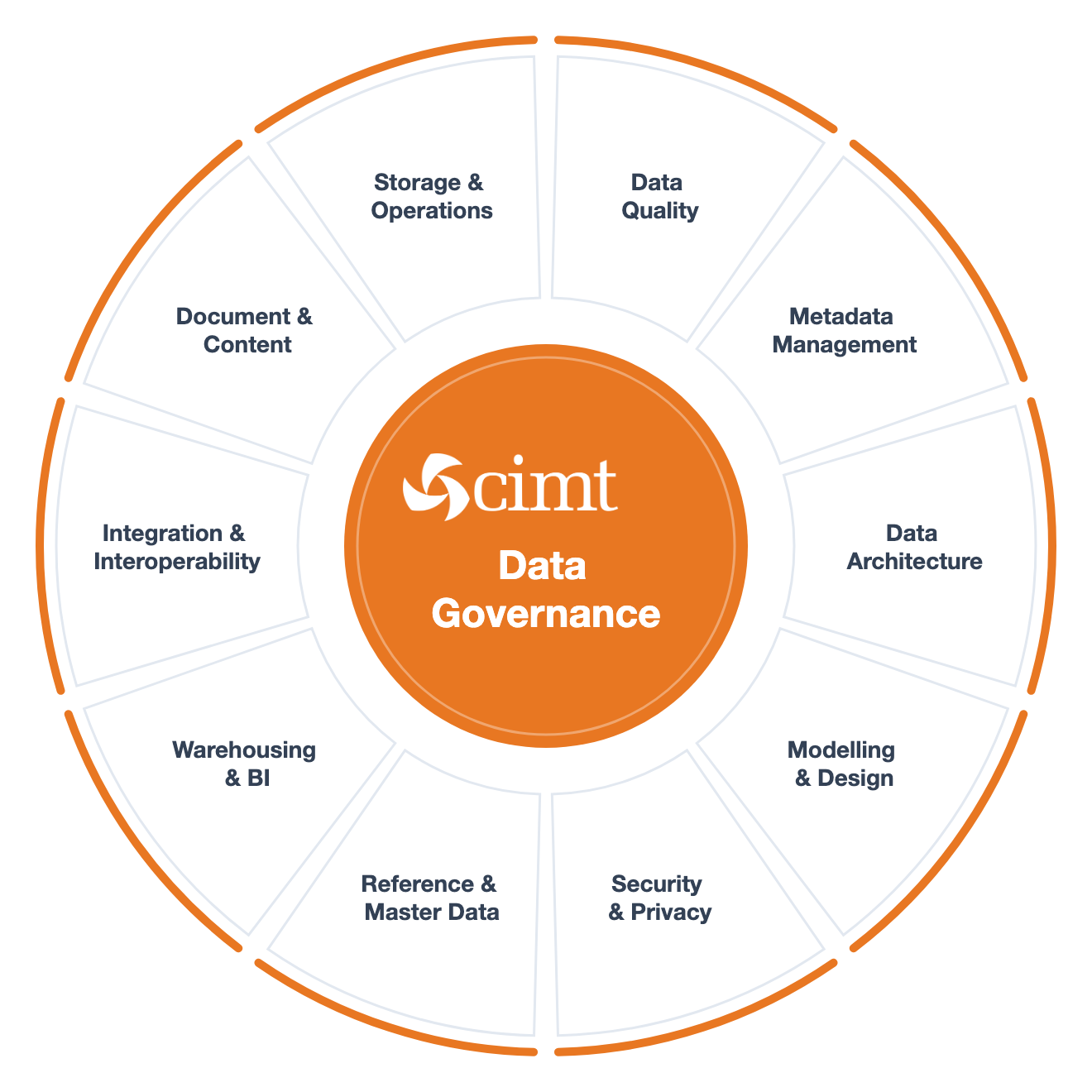
The DAMA wheel
A friendly guide to managing what might just be your organisation's most valuable asset: its data. No jargon, just a clear explanation.
What is DAMA?
Every organisation runs on data: customer records, sales numbers, reports, documents and more. But data only creates value when it is trustworthy, well organised and easy to use. That is where DAMA (the Data Management Association) comes in. DAMA created a globally recognised framework, often called the DAMA wheel, that breaks data management into clear, manageable pieces.
Think of it like maintaining a house. You do not just focus on one room; you look after the foundation, the plumbing, the security and the day-to-day upkeep. The DAMA wheel does the same for your data, making sure nothing important gets overlooked.
See also: A good data platform: why it pays off and Data products: value, necessity and how DAMA helps
The hub
At the centre of the wheel sits Data Governance: the rules, roles and responsibilities that hold everything together. It answers the simple but vital questions: who owns this data? Who can use it? How do we keep it accurate and safe? Governance is the steering wheel that keeps every other area moving in the same direction. cimt puts this into practice through data governance and data quality
The spokes of the wheel
Surrounding the hub are the key areas of good data management. Together they cover the whole of the data practice.
Knowledge area
The rules, roles and responsibilities that hold everything together: who owns the data, who may use it, and how it stays accurate and safe.
Making sure information is accurate, complete and reliable, so people can trust what they see.
Keeping a clear 'dictionary' of what your data means and where it comes from.
Defining the overall structure and standards for how data is organised across the organisation, like the master blueprint for a building.
Detailing how individual data elements relate and connect, like the working drawings that turn the blueprint into something you can build.
Protecting sensitive information and staying compliant with regulations like GDPR.
Creating a single, consistent 'source of truth' so everyone works from the same numbers.
Turning raw data into clear reports, dashboards and insights.
Connecting systems so data flows smoothly instead of being copied by hand.
Organising files, records and unstructured information.
The behind-the-scenes engine that keeps everything stored, backed up and running.
Why it matters
When these areas are aligned, organisations make faster decisions, reduce risk, cut wasted effort and build genuine trust in their numbers.
When they are neglected, the familiar pain follows: reporting delays, compliance worries and figures that do not add up. The DAMA wheel helps you stay ahead of that, structurally.
Use the wheel
Want to use the wheel in a presentation, an internal document or a workshop? Go ahead, as long as you credit cimt. Here it is in high resolution.
Download as PNG (1320 by 1320) or SVG (scalable)
Free download
A light management guide: management summary, per knowledge area a relatable example, what it delivers and where to start. With a plan for the first 90 days and a Data Governance Operating Model Canvas as an appendix.
18 pages, PDF
Who helps you with this
Not a sales pitch but a half-hour conversation about substance: where your organisation stands on the DAMA wheel, and what a sensible first step looks like.
Book an introduction
Taco van het Reve
Managing Director

Robin du Maine
Managing Consultant

Mirco Kriesten
Managing Consultant

Wafaa Derham
Managing Consultant
Where do you stand?
Our Data Governance Maturity Assessment is built on the DAMA framework. It shows you where your organisation is already strong, where the gaps are and what to tackle next: a clear, practical starting point.
Frequently asked questions
The DAMA wheel is the visual representation of the DAMA DMBoK, the international standard for data management. Data governance sits at the centre, with ten further knowledge areas forming a ring around it. Together they make up the eleven knowledge areas of the framework. The wheel exists to give an overview: it shows that the areas are connected and cannot be arranged in isolation.
Around data governance sit Data Architecture, Data Modelling & Design, Data Storage & Operations, Data Security & Privacy, Data Integration & Interoperability, Document & Content Management, Reference & Master Data, Data Warehousing & Business Intelligence, Metadata Management and Data Quality. With governance at the core that makes eleven areas.
The DMBoK, in full the Data Management Body of Knowledge, is the reference work from DAMA International in which every knowledge area is worked out. The wheel is the diagram that summarises the structure of that book. In practice people say "the DAMA wheel" when they mean the layout and "DMBoK" when they mean the content.
Because governance determines how the other ten areas are set up: who owns what, which definitions apply, which quality requirements hold and how you evidence them. Without that layer, data quality, metadata and security become ten separate projects. With it, they become parts of one whole.
